Guide for owners
Your own website or Booking? Wrong question — here’s the right one.
· 6 min read · from Rovinj
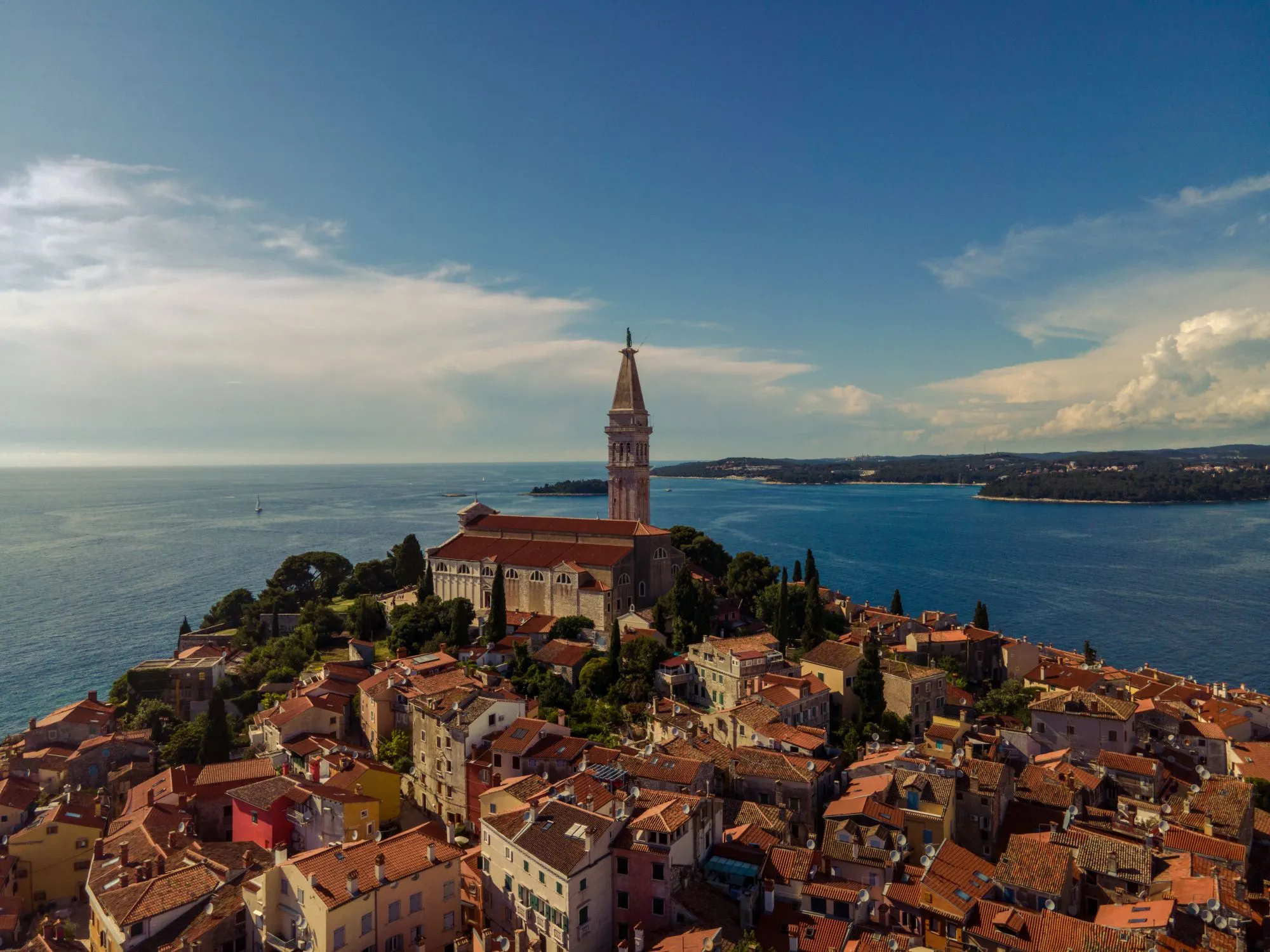
An average villa in Istria earning €30,000 a year hands Booking around €4,800 of it. Every year. That’s a new pool pump, half a kitchen — or someone’s wages for July and August.
And yet “own website or Booking?” is the wrong question. It isn’t either–or. Booking doesn’t hurt you by existing — it hurts you by being the only road to your guests. The real alternative isn’t leaving the portals. It’s no longer handing them the guests who wanted to book with you directly anyway.
What commission really costs you
Booking.com charges a standard 15% — and up to 18% with programmes like Preferred Partner. Airbnb takes its share through fees on both sides. On paper the number looks bearable — until you multiply it by years. Move the slider and look at your own figures:
Commission calculator
€30,000
€4,800
goes to the portal every year
€24,000
over 5 years
€48,000
over 10 years
If just half of those guests started booking direct, you’d keep €2,400 a year — a €799 website pays for itself in 4 months.
When Booking is still the right call
Let’s be honest, because nobody else in this business will be: if you’ve just started renting, Booking is the fastest road to your first guests. No reviews, no returning guests, nobody knows your villa’s name. The portals give you visibility you can’t yet buy on your own. At that stage, commission isn’t a cost — it’s marketing.
The problem arrives later, and quietly. Third season, five stars, guests who come back — and you’re still paying full commission on guests your villa earned by itself long ago. A returning guest isn’t Booking’s guest. They’re yours. They just have nowhere to book with you.
What actually happens when a guest tries to book direct
Here’s the scene that repeats every summer. A guest from Munich stayed with you last year. This year they type your villa’s name into Google. And they find — your Booking profile, your Airbnb listing, and maybe a Facebook page from 2019. They book through Booking, because there’s no other choice. You just paid 16% commission on a guest you created yourself.
That’s the gap an own website closes. It doesn’t have to “beat” Booking in the open market — it only has to catch the guests already looking for you by name: returners, referrals, the people whose friend said over dinner, “ask about Villa Maslina in Rovinj.”
What a site needs before guests actually book
A bad website is worse than none — a guest landing on a slow, cluttered page with murky photos is back on Booking within three seconds. For direct booking to work, your site has to look more credible than your portal profile:
- Photography that sells. An aerial shot shows what a portal can’t: where the villa sits, how close the sea is, what you see from the terrace.
- Speed. A guest on German mobile data doesn’t wait. The page must open instantly — ours load before the guest can lift a finger, even on mobile data.
- Languages. A German guest books in German. Croatian, English, German and Italian are the minimum for Istria.
- An enquiry with no hurdles. No signup, no cart: name, dates, message. You reply the same day and agree directly.
Here’s what that looks like in practice: a demo site for a stone villa — from the aerial photography to the enquiry, everything built around one decision by the guest: “book direct.”
Three objections we hear every week
“My calendar is full through Booking anyway.” True — but the question isn’t occupancy, it’s what each of those reservations costs you. A full season at 16% commission means you handed the portal a whole month of revenue.
“Guests trust Booking more than they trust me.” New guests — yes. But returners and referrals trust you, and they’re the most profitable guests you have. They don’t need a middleman. They need an address.
“What does it cost?” Packages start at €799 — one-off, no monthly commission. By the numbers in the calculator above: for most villas, that’s less than the portal takes in a single month of the season.
Common questions
Is your own website a replacement for Booking.com?
No, and it shouldn’t be. Booking brings you guests who would never have found you — that part it does well. Your own site catches the other group: returning guests, referrals, and the people who saw you on a portal and then searched your name on Google. Most owners do best with both channels.
When is an own website not worth it?
If you let one room for a few weeks a year, have no returning guests and no plans to grow, commission is probably cheaper than a website. A site pays off once you have guests who come back, or once the commission on each booking is large in absolute terms.
Do I need an availability calendar and online payments?
Not necessarily. For most villas and apartments a clear enquiry form is enough — the owner confirms manually and keeps control of pricing and dates. Payment systems and live calendars introduce double-booking risk, so add them only when you genuinely need them.
How long before a website starts bringing bookings?
The first enquiries usually come from guests who already know you — they only needed an address, and that works immediately. Organic arrivals from Google take longer, typically a few months, because a new site is still building history.
The next step costs nothing
We’re not asking you to take our word for it. Send us the link to your listing — we’ll send back a free demo of your villa’s website, with your photos and your name on it. No obligation; the demo is yours whether you choose us or not. We’re based in Rovinj — in season, we can also meet in person.
P.S. Commission never shows up on an invoice — that’s why it doesn’t hurt. But multiply it by ten years in the commission calculator and look at the number. That’s the price of waiting.